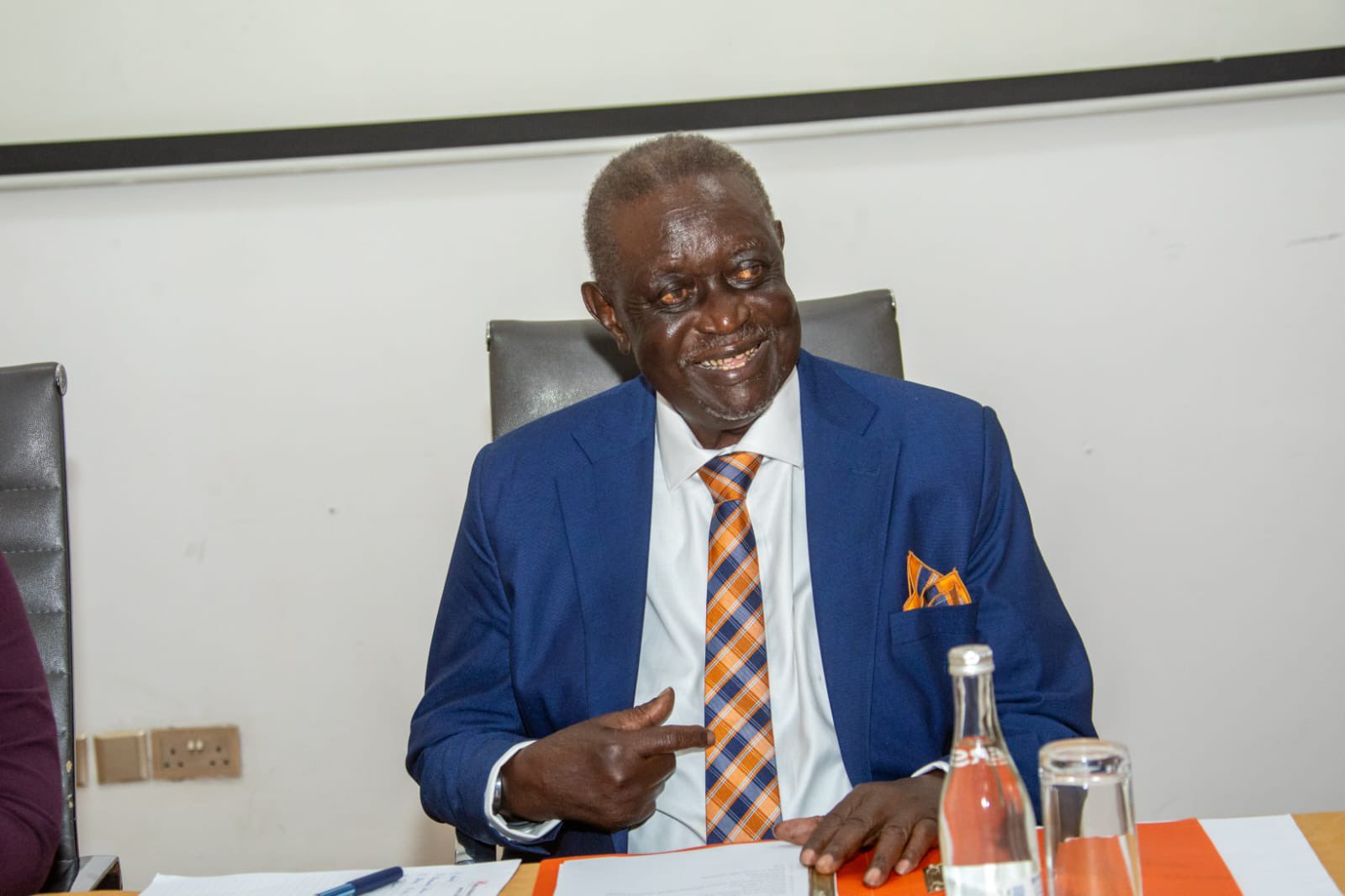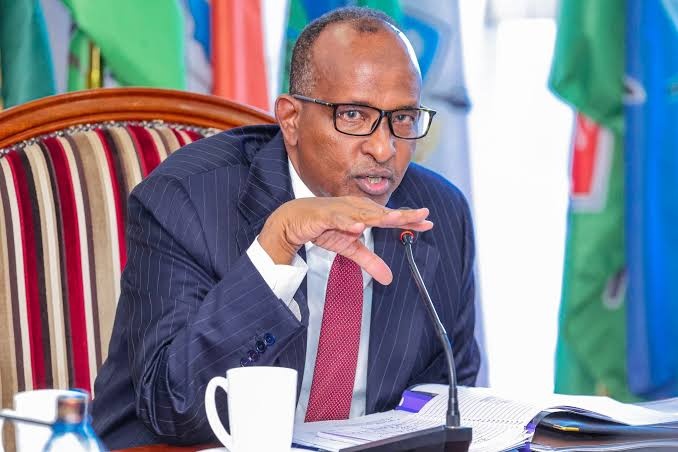
Health Cabinet Secretary Aden Duale. He has confirmed Kenya’s first imported Ebola case after a Kenyan man who had been living in the Democratic Republic of Congo died at a Nairobi hospital. PHOTO | FILE
By Kennedy Otieno
Health officials launch urgent contact-tracing operation for 23 passengers, four crew members on Jambojet Flight 8523
The government has launched an urgent hunt for passengers and crew members who shared a flight with Kenya’s first confirmed Ebola victim as health authorities race to contain possible spread of the deadly virus.
The Ministry of Health said it was pursuing 23 passengers and four crew members who travelled on the same Jambojet flight as the patient, who has since died.
The passenger, a Kenyan national who had been living in the Democratic Republic of Congo (DRC) for seven years, arrived in Nairobi on Saturday, October 3, after travelling from Kampala aboard Jambojet flight 8523.
Health Cabinet Secretary Aden Duale said the patient underwent routine public health screening at Jomo Kenyatta International Airport before being picked up by a relative and a friend and taken to Nairobi Hospital.
He was isolated at the hospital after presenting with symptoms consistent with viral haemorrhagic fever. Laboratory tests later confirmed Ebola Bundibugyo virus disease.
Despite receiving supportive treatment, the patient died at about 11.30pm on Monday.
Duale said he had sought treatment at several hospitals in the DRC before travelling by road to Kampala, Uganda.
From Kampala, he boarded a flight to Nairobi on Saturday.
The CS said health officials had so far identified 28 people who had contact with the deceased, with authorities now expanding the search to fellow passengers and crew who may have been exposed during the flight.
“Arrangements for a quarantine of those at risk have been prepared to protect the public,” the CS said.
The frantic contact-tracing operation comes as Kenya confronts its first confirmed Ebola case, raising fresh concerns over the possibility of the virus spreading after the infected traveler crossed borders from the DRC through Uganda before arriving in Nairobi.
Officials are expected to establish the whereabouts of the passengers and crew and monitor them for possible symptoms.
The government is also tracing other people who may have interacted with the patient after his arrival at JKIA, including those who helped transport him to hospital.
According to Duale, the two used a Toyota Fielder to transport him from the airport.
The patient had reportedly been ill for about a month and had received treatment at several hospitals in the DRC before travelling by road to Kampala and then boarding the flight to Nairobi.
His condition deteriorated after arrival in Kenya, with doctors noting fever, intense fatigue, weakness, muscle pain, painful swallowing, sore throat and bleeding under the skin at an injection site.
The confirmation has placed Kenya’s health surveillance and emergency response systems under intense scrutiny, particularly because the patient managed to travel across borders before his condition was confirmed.
The government has moved to reassure the public that measures are in place to contain the disease, including isolation, contact tracing and quarantine of people considered to be at risk.
Kenya had intensified Ebola preparedness in recent months following the outbreak in the DRC and had designated four laboratories for Ebola testing, including the National Public Health Laboratory, KEMRI Nairobi, KEMRI Kisumu and a mobile laboratory serving Busia and Bungoma.
The latest development is likely to put renewed focus on screening at Kenya’s points of entry and the effectiveness of the country’s disease surveillance system.
The DRC is battling a major outbreak of the Bundibugyo strain, while Uganda previously reported cases linked to the outbreak. The US CDC says the DRC outbreak has become the second-largest Ebola outbreak on record, with more than 8,400 confirmed cases reported by October 2.